Clive aligns with the planner on timing, room flow, attire, and where the magic best supports the agenda.
Seattle corporate magic for receptions, conferences, client dinners, and offsites.
The cocktail hour is the part most events fumble. Clive gives the room something to react to together — so the guests you actually wanted to network start talking to each other, not checking the time.
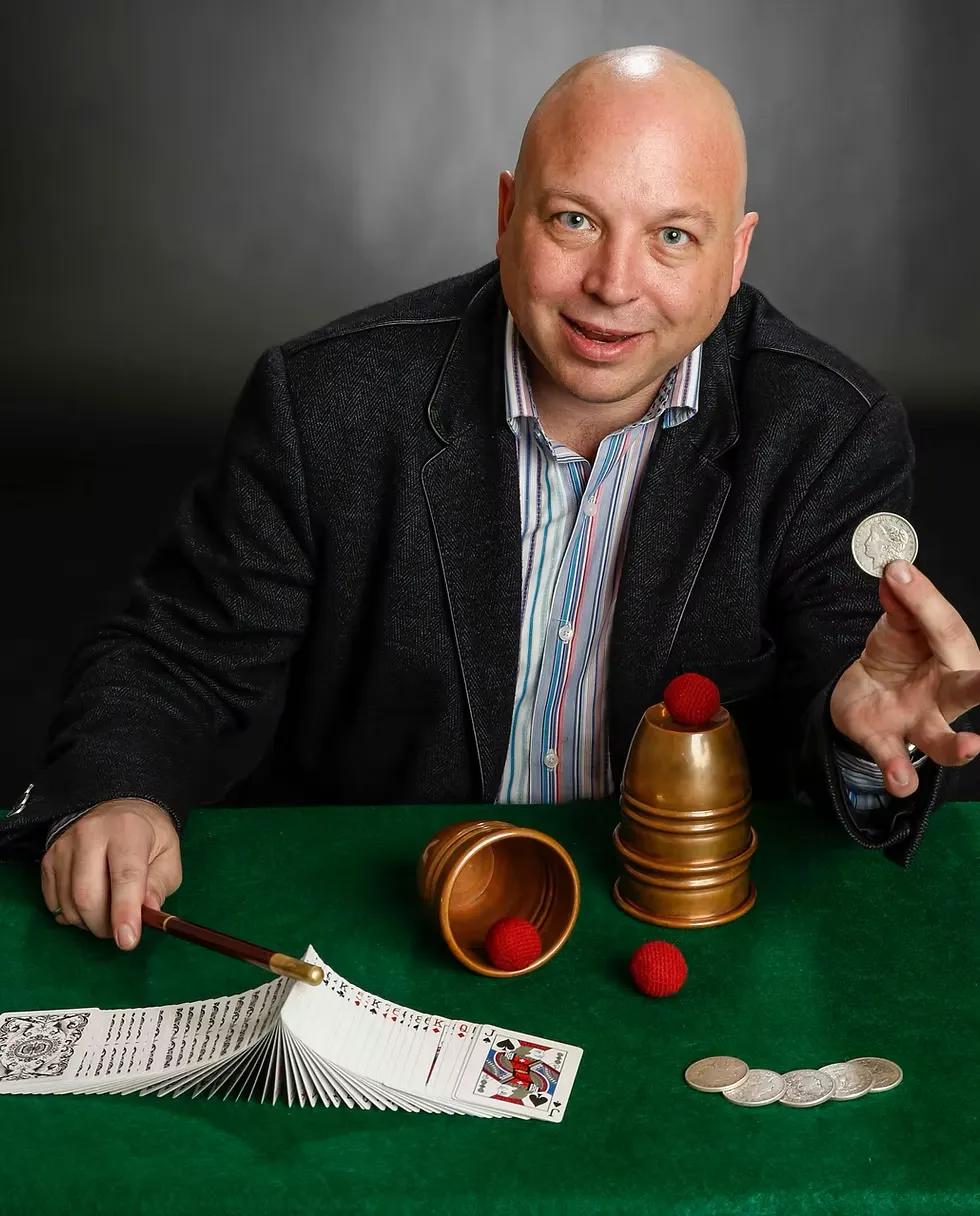
Coordinated with the planner and the agenda — never competing with them.
Clive aligns with the planner on timing, room flow, attire, and where the magic best supports the agenda.
Approaches the small groups that have already formed — never interrupts a real conversation or a senior team huddle.
One close-up moment becomes the thing the cluster talks about — and reasons for new clusters to form around it.
Wraps cleanly as the program moves into speeches, dinner, or the next agenda block. No mic, no production tail.
Same venue, same guest list, same hour on the schedule. What changes is whether anyone's actually networking.
Not a stage show. A presence that lowers social friction and makes the room work.
Cross-team and client introductions get a warm opening line — instead of weather, parking, or another LinkedIn pitch.
Arrivals, room turns, and the stretch before speeches stop feeling like waiting — and start feeling like part of the event.
A planned moment built around a leader, honoree, or top client — so the spotlight feels personal, not corporate.
Planners get one less awkward stretch to manage. The entertainment removes pressure, not adds it.
Seattle companies book different event formats for different reasons, so the entertainment has to adapt to the room, the agenda, and the audience.
Adds movement during mingling and gives the room something to gather around besides dinner and drinks.
Useful between formal program moments when attendees are standing around with badges, drinks, and not much to say yet.
Stops traffic, pulls attention toward the booth, and creates a reason for prospects to stay long enough to start a useful conversation. See the Seattle trade show page.
Gives clients a personal, close-up moment at the table or reception instead of another generic after-dinner activity.
The entertainment budget isn't a cost. It's whether the room actually does what the event was supposed to do.
Cocktail hours and receptions cost the same whether anyone's talking or not. Magic makes the budget you already spent earn back.
The "networking hour" rarely is one without a reason for strangers to share a moment. The magic provides the reason.
"Did you see what he did with…" beats "the food was nice" Monday morning. The event becomes a thing people retell.
No stage, no mic, no production. Clive shows up briefed and works around the agenda you already have.
What event planners and corporate hosts usually ask before booking.
Company holiday parties, conferences, client appreciation events, executive dinners, receptions, awards nights, and networking events across Seattle and the Eastside.
It depends on the format. Close-up magic works especially well for cocktail hours, mixers, and networking. A feature show works when there's a clear program moment with a seated audience.
Yes. When the event allows, Clive builds in a planned moment around a leader, honoree, or top client — so the spotlight feels personal rather than generic.
Yes. For trade show booths specifically, see the trade show page — same approach, different goal (stopping aisle traffic and warming handoffs to the team).
For strolling close-up, no setup is needed. For a feature show, Clive brings battery-powered sound and a wireless mic — no venue power required.
Send the date, room style, and guest count. Clive will suggest the format that fits the flow of the event.