- You vet the entertainment knowing the client will second-guess
- Day-of, you're hunting them down for an AV check
- Setup runs long and pushes the cocktail hour
- The performer needs direction between sets
- Post-event, you're managing "too loud" feedback
Seattle event magic for planners, agencies, and venues.
The entertainment doesn't become another thing you have to manage on event day. Clive shows up briefed, works the room, hands off clean, and makes you look good to the client.
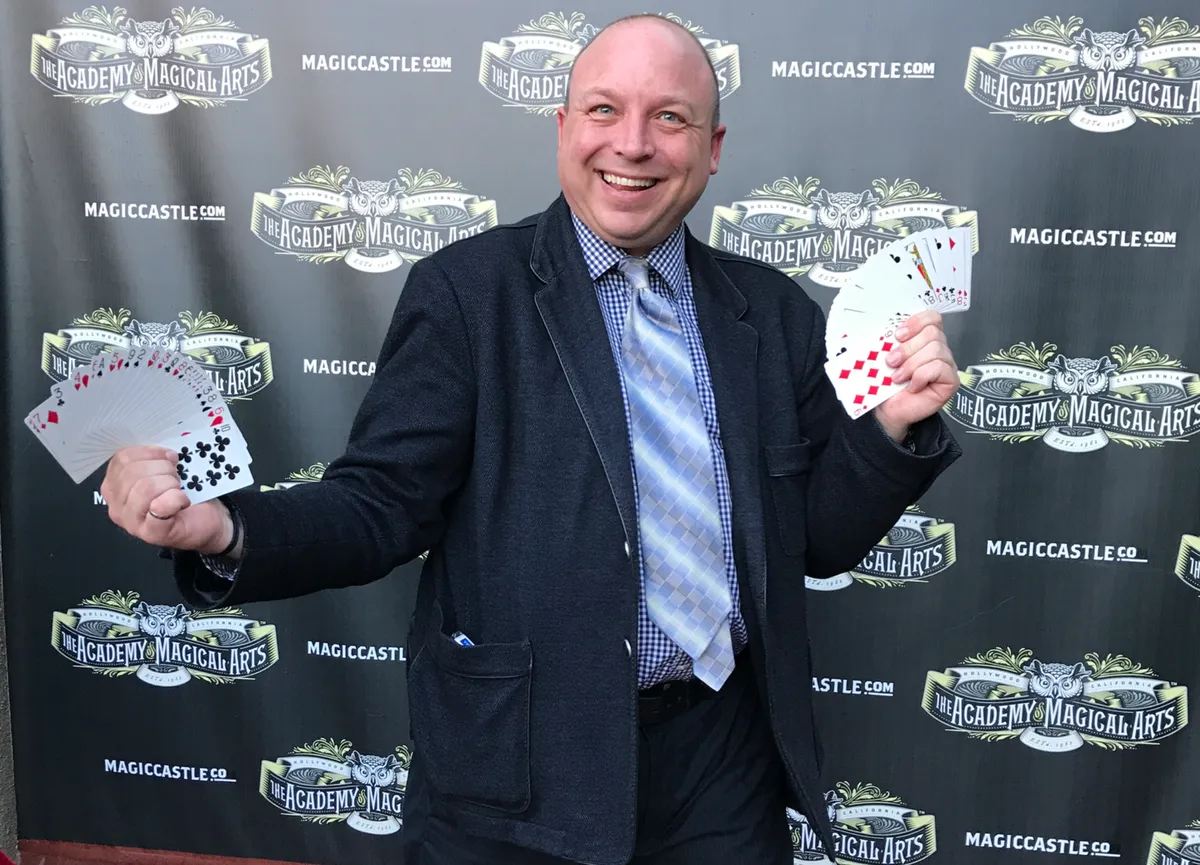
Same client, same venue, same budget line. What changes is whether your phone rings the week after.
The buyer is your client. The user is you. The performance has to serve both.
Timeline, attire, room flow, and client sensitivities are nailed down before the event — not improvised on site.
Checks in with you, confirms the window, then works the room. You're free to manage the actual event.
Restrained for executive audiences, warm for networking, lively for guest celebrations. The tone is briefed, not guessed.
The client sees the room working. You get credit for the recommendation. The performer doesn't try to take it.
Reception Flow: strolling close-up for cocktail hours, mingling events, room turns, and open networking.
Reception + Feature Spot: close-up coverage plus a short scheduled focal-point moment when the room needs one.
Trade Show Booth Flow: a message-aware interaction designed to stop passersby and hand warm conversations to the team.
Quick callback. Inquiries get a clear, direct response — not a sales sequence.
Run-of-show alignment. Timeline, attire, room flow, and client sensitivities all confirmed in writing.
Low-lift logistics. Most formats need no stage, no PA, no venue power.
Day-of independence. Checks in with you, then works the room.
The event types where planners get the most return on a recommendation.
Guests need a reason to loosen up, connect, and stop defaulting to small talk.
Company parties where the room needs energy, polish, and better guest interaction between formal moments.
Exhibitors who want better first stops, warmer handoffs, and less cold-calling from the edge of the booth.
When the entertainment needs to feel upscale, personal, and easy to integrate without becoming too loud or too casual.
What planners, agencies, and venue teams usually ask before recommending Clive.
Date and run-of-show confirmed in writing. Clive briefs against the timeline, attire, room flow, and any client sensitivities before the event — nothing left to chase the week of.
Reads the room and adapts. Busy cocktail hours, noisy receptions, mixed-energy crowds, and on-the-day timeline shifts are normal working conditions, not a problem.
For strolling close-up, none. For a feature spot, Clive brings battery-powered sound and a wireless mic — no venue power required. No truss, no production tail.
Yes. The tone stays restrained for executive audiences, warm for networking, and lively for guest celebrations. Briefed in advance, not improvised on the day.
Clive checks in with the planner or venue lead, confirms the start window, then works the room without needing constant direction.
Send the date, room type, and rough timeline. Clive will reply with availability and the format that fits.